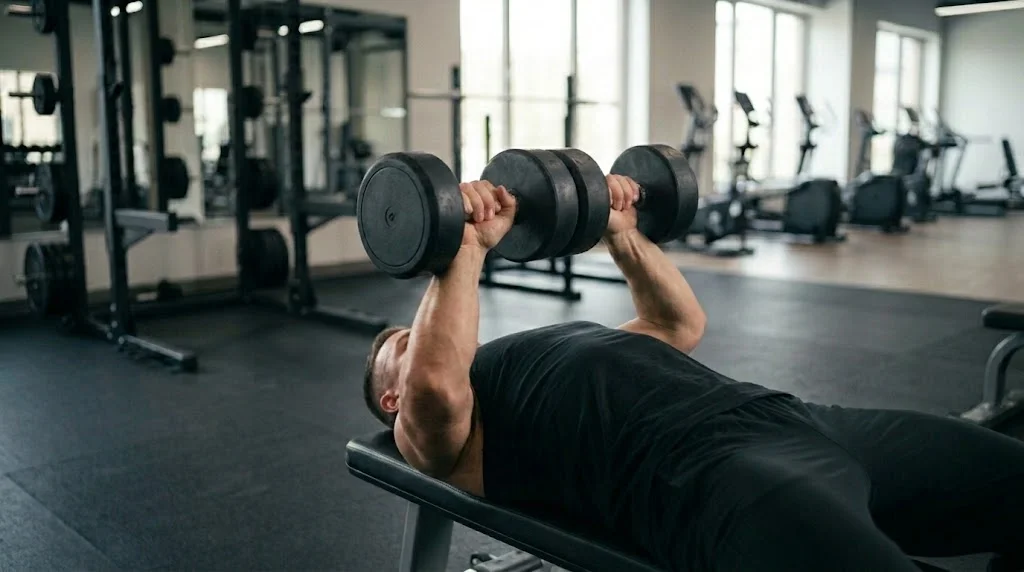
The dumbbell lateral raise is the cornerstone isolation exercise for the lateral (side) deltoid, the muscle responsible for shoulder width. By abducting the arms out to the sides against gravity, it places direct, focused tension on the side delts with minimal involvement from other muscle groups. It is a staple for building the rounded, capped look of well-developedshoulders.
What Muscles Does the Dumbbell Lateral Raise Work?
- Primary: Lateral deltoid (side shoulder)
- Secondary: Anterior deltoid, supraspinatus
- Tertiary: Upper trapezius, serratus anterior
How Do You Set Up for the Dumbbell Lateral Raise?
Stand tall with feet hip-width apart, knees soft, and adumbbellin each hand at your sides with a neutral grip (palms facing your thighs). Maintain a slight bend in your elbows, keep your chest up, brace your core, and let your shoulders sit down and back rather than shrugged up toward your ears.
How Do You Perform the Dumbbell Lateral Raise?
- Initiate from the shoulders by raising both dumbbells out to the sides in a smooth, controlled arc
- Lead with the elbows rather than the hands, keeping your wrists neutral and slightly below or level with your elbows
- Raise until your arms reach shoulder height so the upper arms are roughly parallel to the floor
- Pause briefly at the top where you feel the strongest contraction in the side delts
- Lower with control back to the starting position, resisting the weight on the way down
- Repeat for the desired number of reps without letting the dumbbells rest against your thighs between reps
What Are the Key Form Cues?
- Lead with the elbow: Drive the elbows up and out rather than thinking about lifting the hands
- Keep a soft, consistent elbow bend throughout the entire set
- Imagine pouring water from a pitcher by tilting your pinky slightly upward at the top
- Keep your traps relaxed so the side delts do the work rather than the neck
- Move smoothly through the full range without swinging or bouncing
What Are the Most Common Mistakes?
- Using too much weight: Heavy dumbbells force momentum and recruit the traps instead of the side delts.
- Shrugging the shoulders: Letting the traps improve shifts tension away from the target muscle.
- Swinging with the hips or torso: Body english reduces the stimulus on the deltoid.
- Raising the hands above the elbows: Internally rotating and lifting the wrist too high recruits the front delt and traps.
- Going too high: Raising well past shoulder height transfers load to the upper traps.
What Are the Best Dumbbell Lateral Raise Variations?
- Seated dumbbell lateral raise: Removes leg drive to enforce strict form
- Cable lateral raise: Provides constant tension across the full range
- Leaning lateral raise: Increases the stretch and tension in the bottom position
- Lying incline lateral raise: Emphasizes the lengthened portion of the movement
- Single-arm lateral raise: Allows full focus on one side and corrects imbalances
How Do You Progress the Dumbbell Lateral Raise?
- Increase weight gradually: Add 2.5-5 pound increments only when form stays clean
- Increase reps: Build to 15-20 reps before increasing the load
- Add a pause: Hold for one to two seconds at shoulder height to increase time under tension
- Use partial reps or drop sets: Extend the set after reaching technical failure
- Slow the eccentric: Lower over three to four seconds to maximize tension
How Should You Program the Dumbbell Lateral Raise?
Lateral raises respond best to higher rep ranges of 12-20 with moderate, controllable weight and strict tempo. Include them one to three times per week, typically after compound pressing movements when fatigue is less of a limiting factor on heavy lifts. Rest 45-60 seconds between sets. Because the side delts recover quickly, frequent, high-quality volume tends to drive better growth than chasing maximal weight.