
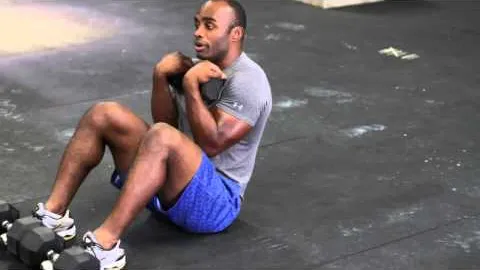
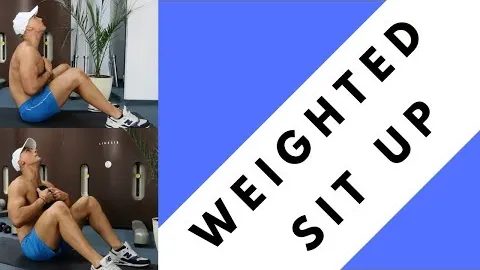
If you want to strengthen your core and build a solid foundation of abdominal muscles, the weighted sit-up exercise is an excellent choice. By adding resistance to this traditional exercise, you can take your abdominal training to a whole new level. In this article, we will discuss the benefits of weighted sit-ups, proper form and technique, safety precautions, and variations to keep your workouts diverse and challenging.
Performing weighted sit-ups forces your abdominal muscles to work harder than with regular sit-ups. This increased resistance stimulates muscle growth and development, leading to a stronger and more defined core.
A strong core is essential for performing everyday activities, as well as sports and athletic movements. Weighted sit-ups engage not only your rectus abdominis but also your obliques and transverse abdominis, resulting in improved functional strength that translates into better overall performance.
Weighted sit-ups require strong stabilizing muscles, including the muscles in your lower back and hips. By regularly incorporating this exercise into your routine, you can improve your posture and overall stability, reducing the risk of injuries and promoting a healthy, upright posture.
Weighted sit-ups offer a wide range of options for adding resistance. Whether you choose to use a barbell, dumbbell, kettlebell, or weighted plate, you can easily adjust the weight according to your fitness level. This versatility allows for continuous progression as you become stronger, making the exercise suitable for individuals of all fitness levels.
To maximize the effectiveness of your weighted sit-ups and ensure safety during the exercise, it is crucial to maintain proper form and technique. Here are the steps to perform a weighted sit-up correctly:
While weighted sit-ups can be incredibly beneficial, it is essential to prioritize safety during your workouts. Consider the following precautions:
Start Light: Begin with a lower weight or even bodyweight sit-ups if you are new to this exercise. Gradually increase the weight as your core strength improves.
Maintain Control: Avoid using excessive momentum or jerk-like movements to lift your upper body. Focus on engaging your core muscles and moving in a slow and controlled manner.
Listen to Your Body: If you experience any pain or discomfort in your lower back or neck area, stop immediately. Consult with a fitness professional before continuing the exercise.
To keep your workouts challenging and prevent plateaus, incorporate various weighted sit-up variations into your training routine. Here are a few options to consider:
Combine the rotational movement of Russian twists with the core-engaging sit-ups. Hold a weight in front of your chest, rotate your torso to one side as you perform a sit-up, and then repeat on the opposite side.
Perform weighted sit-ups on a decline bench to increase the difficulty and engage your lower abdominal muscles.
Lie on your back with your knees bent and feet flat on the floor. Hold a weight plate against your chest and perform a sit-up, twisting your torso to one side so that the weight touches the ground next to your hip. Repeat on the other side.
Attach a weight plate to a dip belt or use a dumbbell between your feet while hanging from a pull-up bar. In this version, the weight adds resistance to the sit-up, challenging your grip, upper body, and core muscles simultaneously.
Weighted sit-ups provide a challenging and effective way to strengthen your core muscles. By adding resistance to this classic exercise, you can enhance your muscle activation, improve functional strength, and enhance stability and posture. Remember to prioritize proper form and technique, and gradually progress the weight to prevent injuries. By incorporating various weighted sit-up variations into your routine, you can keep your workouts diverse and continuously challenge your core muscles. So, grab your favorite weight and start working towards a stronger and more defined core today!
If you're looking for a gym, fitness club or yoga studio, you've come to the right place.
You can find information about gyms in your area. Browse catalog of gyms and find gyms with classes which are you looking for.
On gym page you can find simple information like address, phone or website. You can find list of available classes. You can check availability of personal training or small group classes. On place page you can also see information about open hours.
You can find gyms near you with amenities, courts, studios and equipments.
Use our map to find gym at your city or district.
In Gym Navigator you can find list of exercises with movies for many body parts.
You can browse exercises catalog and find exercises the best of you.
You can also find exercises grouped into workout plans, which you can use to improve you body. Each routine show you exercises one by one and give you possibility to count you progress and count down rest time.