Arm Exercises – Biceps, Triceps & Forearm Workouts
Browse arm exercises with video guides and step-by-step instructions.
No exercises match your search.
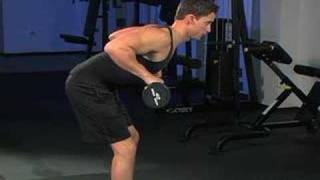
Barbell Rear Delt Row
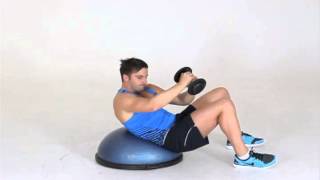
Dumbbell Oblique Pullover Crunch off Bosu
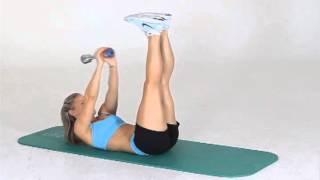
Dumbbell Oblique Pullover Crunch Legs Raised
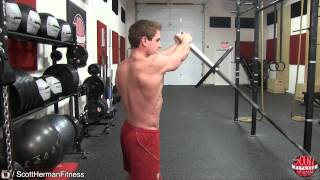
Landmine Oblique Twist
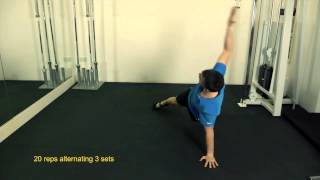
Windmill Push Up Workout
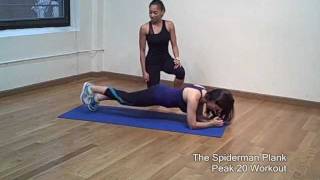
Spiderman Plank Crunch
Arm Muscles Overview
The arms consist of the biceps on the front and the triceps on the back, along with the forearms which contain numerous smaller muscles. These muscle groups are responsible for flexing and extending the elbow, and for rotating the forearm. The primary muscles targeted in arm training are:
- Biceps brachii - located on the front of the upper arm, responsible for elbow flexion and forearm supination (rotating the forearm outward). Despite its importance in strength sports, it's relatively small and benefits from isolation.
- Triceps brachii - a three-headed muscle on the back of the upper arm that makes up about two-thirds of arm mass. It's responsible for elbow extension and contributes significantly to pressing strength.
- Forearms - include flexors and extensors that control wrist movement and grip strength, essential for any pulling or gripping exercise.
Why Arm Training Matters
While arm exercises are popular for aesthetics—bigger arms are highly visible—they're also functionally important. Strong biceps improve your pulling strength and reduce injury risk during heavy rowing and pull-up movements. Strong triceps contribute directly to pressing strength and help stabilize the shoulder joint during overhead pressing.
Arm training also improves grip strength and forearm endurance, which transfer to real-world activities like carrying objects, climbing, and sports performance. Training arms directly allows you to isolate these muscles after heavy compound work, driving additional hypertrophy gains that wouldn't occur from compound movements alone.
Exercise Categories
Arm exercises fall into several distinct movement patterns:
Bicep curls flex the elbow while the arms are positioned in front of or to the side of the body. Barbell curls, dumbbell curls, cable curls, and hammer curls all train the biceps as the primary mover, with variations in leverage and range of motion.
Tricep extensions extend the elbow through various planes—overhead, parallel to the body, or behind the body. Rope pushdowns, bar pushdowns, skull crushers, and dips all effectively target the triceps.
Compound pulling movements like pull-ups, chin-ups, and rows heavily involve the biceps as secondary movers. While not arm-isolation exercises, they contribute significantly to arm development.
Forearm exercises including wrist curls, reverse wrist curls, and farmer carries train the smaller muscles of the forearm that are often neglected but important for grip strength and preventing tennis elbow.
Training Tips
Maximize time under tension: Arms respond extremely well to moderate weights with controlled tempos. Avoid using momentum, and take 2-3 seconds to lower the weight on every rep to ensure maximum muscle stimulus.
Training frequency: Because arms recover quickly due to their smaller size, they tolerate high frequency training. Training arms 3-4 times per week with varied exercises prevents plateaus.
Mind-muscle connection: For isolation exercises, slow down and feel the muscle working. This is where arm training excels—you have the luxury of using lighter weight and focusing purely on the contraction.
Include compound work too: While isolation exercises build size, compound pulling movements like chin-ups and rows also develop the arms and carry over to overall pulling strength.
Key Arm Exercises to Try
Use the filter above to browse the full library. Some starting points worth exploring include barbell curls, dumbbell curls, hammer curls, cable curls, rope pushdowns, skull crushers, close-grip bench press, dips, reverse wrist curls, and farmer carries.