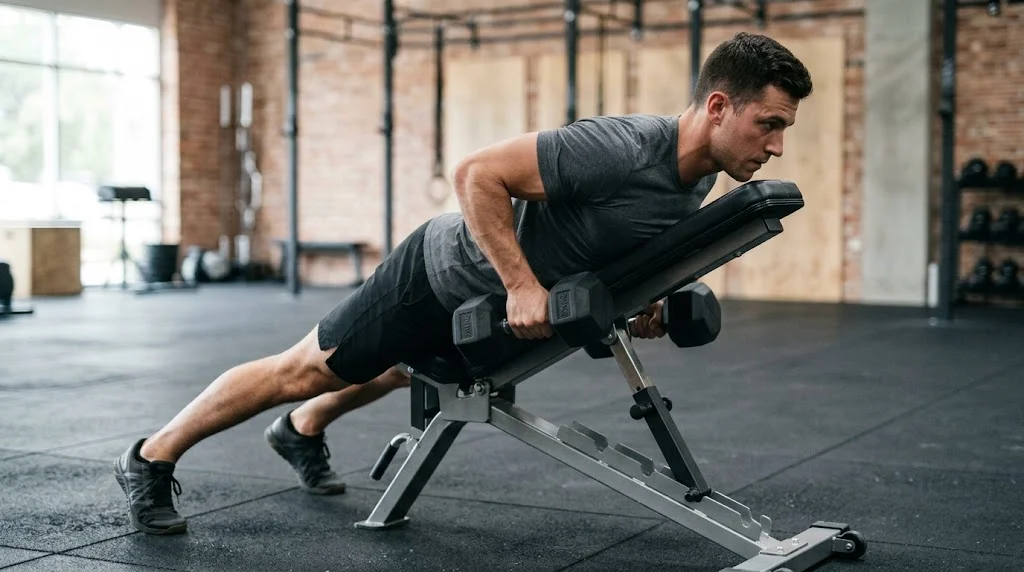
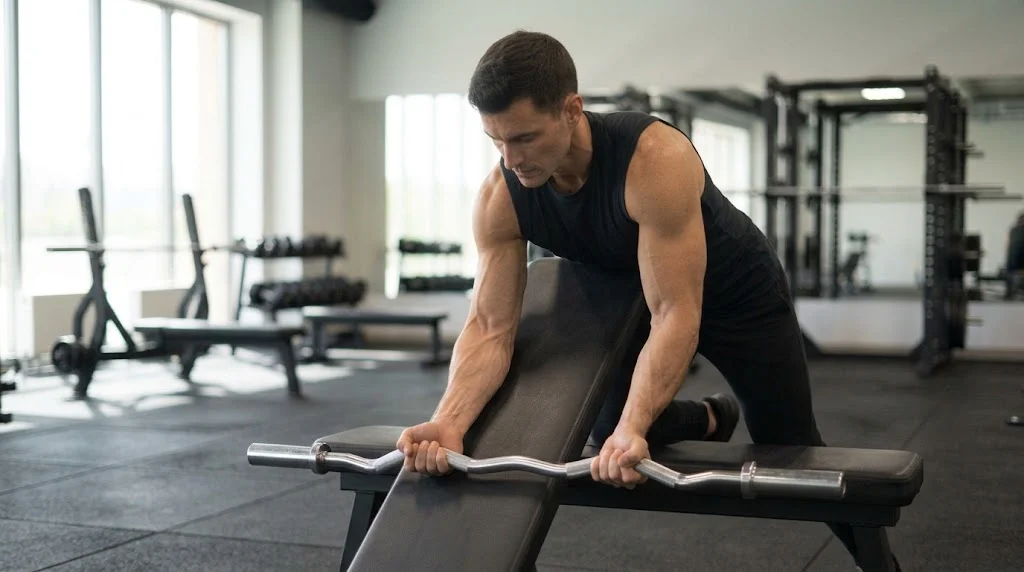
The incline dumbbell curl is abicepsisolation exercise performed while seated back on anincline bench, which positions the upper arms behind the torso. This arm position places the biceps in a lengthened state at the start of each rep, producing a deeper stretch and longer range of motion than a standing curl allows. The setup also pins the shoulders against the bench, removing the ability to swing the weight and forcing the biceps to handle the entire load. It is a reliable exercise for building bicep peak and overall arm size.
What Muscles Does the Incline Dumbbell Curl Work?
- Primary: Biceps brachii (long head emphasis)
- Secondary: Brachialis, brachioradialis (forearm)
- Tertiary: Anterior deltoid (minor stabilization)
How Do You Set Up for the Incline Dumbbell Curl?
Set an adjustable bench to a 45-60 degree incline and sit back with your shoulder blades and head resting against the pad, feet flat on the floor. Hold a dumbbell in each hand with arms hanging straight down below your shoulders, palms facing forward. Keep your shoulders pressed into the bench and your upper arms still - this fixed position is what isolates the biceps.
How Do You Perform the Incline Dumbbell Curl?
- Brace against the bench with your shoulders flat and your core lightly engaged before starting the rep
- Curl both dumbbells upward by flexing your elbows, keeping your upper arms pinned to your sides throughout
- Keep your wrists neutral as you lift, avoiding any flicking or rotation at the top
- Squeeze the biceps hard for a one-second pause once the dumbbells approach shoulder height
- Lower the dumbbells slowly back to the fully extended starting position, resisting the weight the entire way down
- Pause briefly at full extension to let the stretch reset before beginning the next rep
What Are the Key Form Cues?
- Keep the upper arms stationary: All the movement should come from the elbow joint, not the shoulder
- Stay pinned to the bench: If your shoulders lift off the pad, the weight is too heavy
- Control the descent: The lowering phase under stretch is where most of the muscle-building stimulus occurs
- Do not use momentum: Any swinging or jerking at the bottom shifts work away from the biceps
- Keep wrists straight: Avoid excessive wrist curling or extension, which can strain the forearm tendons
What Are the Most Common Mistakes?
- Using too heavy a dumbbell: Forces the shoulders off the bench and turns the movement into a partial-range shoulder curl. Reduce the weight until full range is possible.
- Letting the elbows drift forward: Moves tension off the biceps and onto the front deltoids. Keep elbows tracking directly under the shoulders.
- Rushing the eccentric: Dropping the weight quickly skips the stretch that makes this variation effective. Lower over 2-3 seconds.
- Setting the bench too flat: Reduces the behind-the-body stretch that defines the exercise. Use at least a 45-degree incline.
- Partial range of motion: Stopping short of full elbow extension at the bottom limits the stretch-based benefit of the incline position.
What Are the Best Incline Dumbbell Curl Variations?
- Hammer incline curl: Neutral grip throughout shifts emphasis toward the brachialis and forearms
- Single-arm incline curl: Curl one side at a time to focus concentration and address strength imbalances
- Alternating incline curl: Alternate arms between reps to allow slightly heavier loading per side
- Twisting (supinating) incline curl: Rotate the wrist to full supination as you curl to increase peak contraction
- Standing dumbbell curl: Removes the incline stretch but allows heavier loads and less setup time
How Do You Progress the Incline Dumbbell Curl?
- Increase weight in small increments (2.5-5 pounds per hand) once you can complete all sets with a full stretch and strict form
- Add a controlled 3-4 second eccentric to increase time under tension without adding load
- Progress from alternating to simultaneous curling as your stabilization improves
- Add a brief isometric hold at peak contraction to increase intensity before adding weight
How Should You Program the Incline Dumbbell Curl?
Program incline dumbbell curls on arm or pull days, typically after compound back or bicep movements like pull-ups or barbell rows. Use 3-4 sets of 8-12 reps with a weight that allows full range of motion without losing contact with the bench. Rest 60-90 seconds between sets. Because the incline places the biceps under a deep stretch, this exercise responds well to slower, more controlled tempos rather than heavy loading.