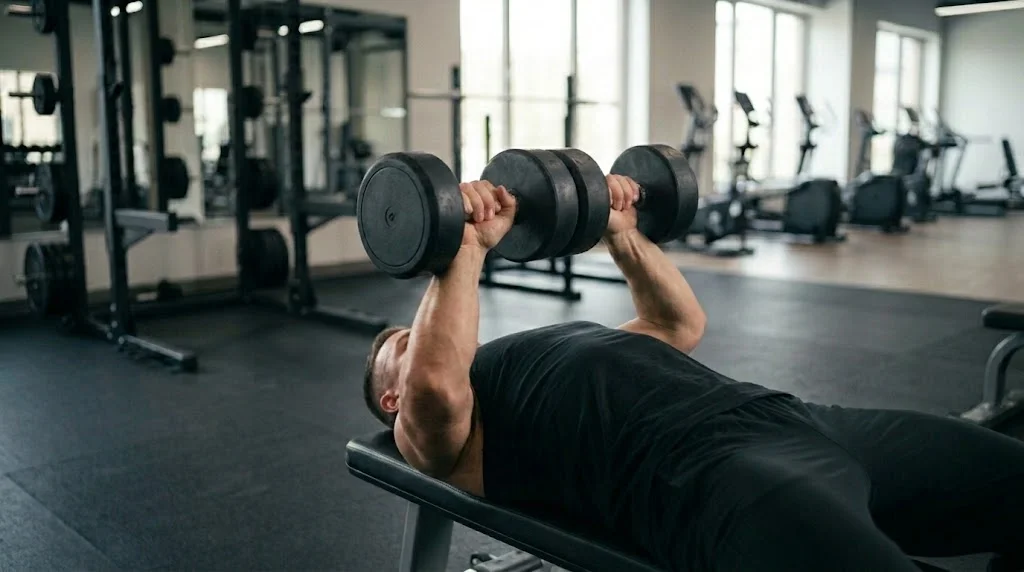
The seated dumbbell side lateral raise is a shoulder isolation exercise done sitting upright on a bench with a dumbbell in each hand, training the lateral deltoid without leg drive or torso lean. Sitting takes away the two cheats that carry a standingdumbbell lateral raise: the knee dip that bounces the weight off the thighs and the backward lean that turns the raise into a front delt and trap movement. With the hips fixed, the same dumbbells feel heavier and the bottom half of each rep is honest. Lifters use it as a strict side delt accessory after pressing.
What Muscles Does the Seated Dumbbell Side Lateral Raise Work?
- Primary: Lateral deltoid (side shoulder)
- Secondary: Supraspinatus, anterior deltoid
- Tertiary: Upper trapezius, serratus anterior, spinal erectors holding the torso upright
How Do You Set Up for the Seated Dumbbell Side Lateral Raise?
Sit on the front half of a flat bench with your feet flat and slightly wider than your hips. Hold a dumbbell in each hand hanging straight down beside the bench, palms facing in. Sit tall with the ribs stacked over the hips, shoulders pulled down away from the ears, and a soft bend in the elbows. Let the dumbbells hang still and clear of the bench.
How Do You Perform the Seated Dumbbell Side Lateral Raise?
- Fix the elbow bend at about fifteen degrees and set the shoulders down before the weights move.
- Raise both dumbbells out to the sides, leading with the elbows, so the arms travel slightly in front of the torso line.
- Stop at shoulder height when the upper arms are parallel to the floor and the elbows sit level with or just above the wrists.
- Hold the top for one count with the traps relaxed and the pinkies tilted slightly up.
- Lower over two to three counts, keeping tension in the side delt until the dumbbells are beside the bench.
- Stop short of the thighs with the arms hanging and the shoulders still set, then begin the next rep.
What Are the Key Form Cues?
- Grow taller on every rep: Push the crown of the head toward the ceiling as the dumbbells rise so the torso cannot lean back to help.
- Elbows lead, hands follow: Think of the elbow tracing the arc and the dumbbell just coming along, so the side delt rather than the forearm does the work.
- Keep the collarbones long and wide so the traps stay quiet at the top.
- Feel the seat under both hips equally for the whole set.
- Slow the last few inches of the descent, where the delt is longest and momentum is easiest to hide.
What Are the Most Common Mistakes?
- Choosing the same dumbbells you use standing: Without leg drive the load is too heavy, the traps take over and the reps shorten. Drop one or two sizes.
- Rocking the torso back: A backward lean turns the raise into a front raise and adds the hip hinge the seat was meant to remove. Stay upright on the front of the bench.
- Shrugging the dumbbells up: Starting from the traps lifts the shoulder girdle instead of abducting the arm. Set the shoulders down first.
- Raising past shoulder height: Above parallel the upper trap dominates and the rotator cuff tendons get pinched under the acromion. Stop when the arms are level.
- Resting the dumbbells on the thighs between reps: Each rep then starts from zero tension. Hang the arms beside the bench.
What Are the Best Seated Dumbbell Side Lateral Raise Variations?
- Standing dumbbell lateral raise: The same movement with the hips free, heavier but less strict.
- Seated paused lateral raise: A two count hold at shoulder height on every rep at the same load.
- Seated bent-elbow dumbbell lateral raise: Ninety degree elbows shorten the lever for a shoulder that dislikes long-arm raises.
- Seated single-arm lateral raise: One arm at a time, free hand on the bench, to fix a lagging side.
- Cable lateral raise: A low pulley keeps tension at the bottom where the dumbbell goes slack.
How Do You Progress the Seated Dumbbell Side Lateral Raise?
- Add 2.5 pounds per dumbbell once every set reaches the top of the rep range with the arms stopping at shoulder height.
- Build from 10 reps to 15 per set before adding weight.
- Add a fourth set when three sets no longer produce a burn in the side delt on the last reps.
- Lengthen the lowering phase to four counts, or add a one count pause at the top, before adding load.
How Should You Program the Seated Dumbbell Side Lateral Raise?
Place it after your overhead or bench pressing on a shoulder or push day, two or three times per week. Work in 3 to 4 sets of 10 to 15 reps with 45 to 60 seconds of rest. Superset it with a rear delt fly so the side and back of theshoulderare trained together. Pick the load by the last rep, not the first.