
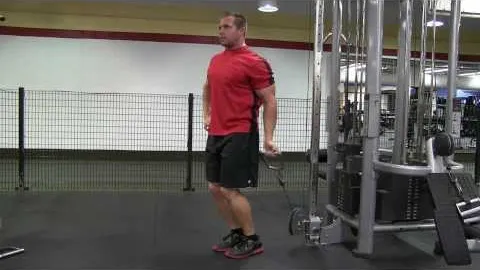
Standing Single Arm Reverse Cable Front Raise: A Guide to Mastering this Effective Shoulder Exercise
Are you looking to build strong and defined shoulders? Look no further than the Standing Single Arm Reverse Cable Front Raise exercise. This challenging exercise targets the anterior and medial deltoids, helping you achieve a well-rounded shoulder development. In this comprehensive guide, we will walk you through the proper form, benefits, variations, and common mistakes to avoid when performing this exercise. Let's dive in!
Before we delve into the details of the exercise, let's first explore the numerous benefits:
Shoulder Development: The Standing Single Arm Reverse Cable Front Raise primarily targets the anterior and medial deltoids, helping to strengthen and enhance the appearance of your shoulders.
Muscle Imbalance Correction: This exercise can help correct muscle imbalances in your shoulders, which are common due to the overemphasis on certain movements in daily life or other exercises. By isolating each shoulder individually, you can address any discrepancies in strength or size.
Increased Stability: As a unilateral exercise, the Standing Single Arm Reverse Cable Front Raise challenges your shoulder and core stability, promoting better overall balance and coordination.
Functional Strength: The shoulder joint is involved in various daily activities. Implementing this exercise into your training routine can improve your ability to perform everyday tasks with greater ease and efficiency.
Now that you understand the benefits, let's move on to the proper form for executing the Standing Single Arm Reverse Cable Front Raise.
To maximize the effectiveness of this exercise and reduce the risk of injury, follow these steps:
Adjust the Cable Pulley: Start by adjusting the cable pulley to chest height. Stand with your side facing the cable machine and grasp the handle with an overhand grip. Position your feet shoulder-width apart and maintain a slight bend in your knees.
Initial Position: Begin with your arm extended straight in front of you, parallel to the floor. This will be your starting position.
Lift the Cable: While keeping your arm straight, exhale and lift the cable handle outwards and upwards. Focus on leading the movement with your elbow and avoid excessive bending at the wrist.
Full Range of Motion: Continue raising your arm until it is slightly above shoulder level. The forearm should be higher than the upper arm. Pause for a brief moment at the top of the movement to fully engage the target muscles.
Lowering Phase: In a controlled manner, inhale and slowly lower the cable back to the starting position. Maintain tension in your shoulder muscles throughout the entire exercise.
Repeat: Complete the desired number of repetitions, then switch sides and repeat the exercise with the opposite arm.
To keep your shoulder workouts varied and challenging, consider incorporating these variations of the Standing Single Arm Reverse Cable Front Raise:
Seated Single Arm Reverse Cable Front Raise: Perform the exercise while seated on a bench instead of standing. This variation provides additional stability and puts less strain on your lower back.
Reverse Dumbbell Front Raise: Instead of using the cable machine, use dumbbells. Stand with a dumbbell in each hand, palms facing downwards. Lift one arm at a time, leading with the elbow while maintaining a slight bend in the elbow joint.
Dual Cable Reverse Front Raise: Stand in the middle of two cable machines or a dual cable machine and perform the exercise with both arms simultaneously. This variation challenges your stability and coordination.
Remember to gradually increase the weight or resistance as your strength improves to continue making progress with your shoulder development.
To ensure you reap the maximum benefits from the Standing Single Arm Reverse Cable Front Raise, be mindful of these common mistakes:
Using Excessive Momentum: Avoid swinging or using momentum to lift the weight. Focus on controlled and deliberate movements to engage the targeted muscles effectively.
Allowing the Elbow to Drop: Keep your elbow elevated throughout the movement. Allowing it to drop reduces the activation of the deltoid muscles and places unnecessary strain on your shoulder joint.
Neglecting Proper Breathing Technique: Remember to exhale during the lifting phase and inhale during the lowering phase. Proper breathing technique enhances your stability and overall performance.
Neglecting the Full Range of Motion: It's crucial to perform the exercise through its full range of motion. By lifting the weight until your forearm is above your upper arm, you effectively target the shoulder muscles.
The Standing Single Arm Reverse Cable Front Raise is a powerful exercise for developing strong and defined shoulders. By incorporating this exercise into your training routine with proper form, you can enhance your shoulder strength, correct muscle imbalances, improve stability, and gain functional strength. Remember to progress gradually and listen to your body to avoid any potential injuries. Now, grab that cable handle and start feeling the burn in your shoulders!
If you're looking for a gym, fitness club or yoga studio, you've come to the right place.
You can find information about gyms in your area. Browse catalog of gyms and find gyms with classes which are you looking for.
On gym page you can find simple information like address, phone or website. You can find list of available classes. You can check availability of personal training or small group classes. On place page you can also see information about open hours.
You can find gyms near you with amenities, courts, studios and equipments.
Use our map to find gym at your city or district.
In Gym Navigator you can find list of exercises with movies for many body parts.
You can browse exercises catalog and find exercises the best of you.
You can also find exercises grouped into workout plans, which you can use to improve you body. Each routine show you exercises one by one and give you possibility to count you progress and count down rest time.