Push Pull Legs: A 6 Day Split
Six sessions, two rotations, and every movement linked to a guide. The most popular split in the gym, written out in full rather than described.
The week
Push A
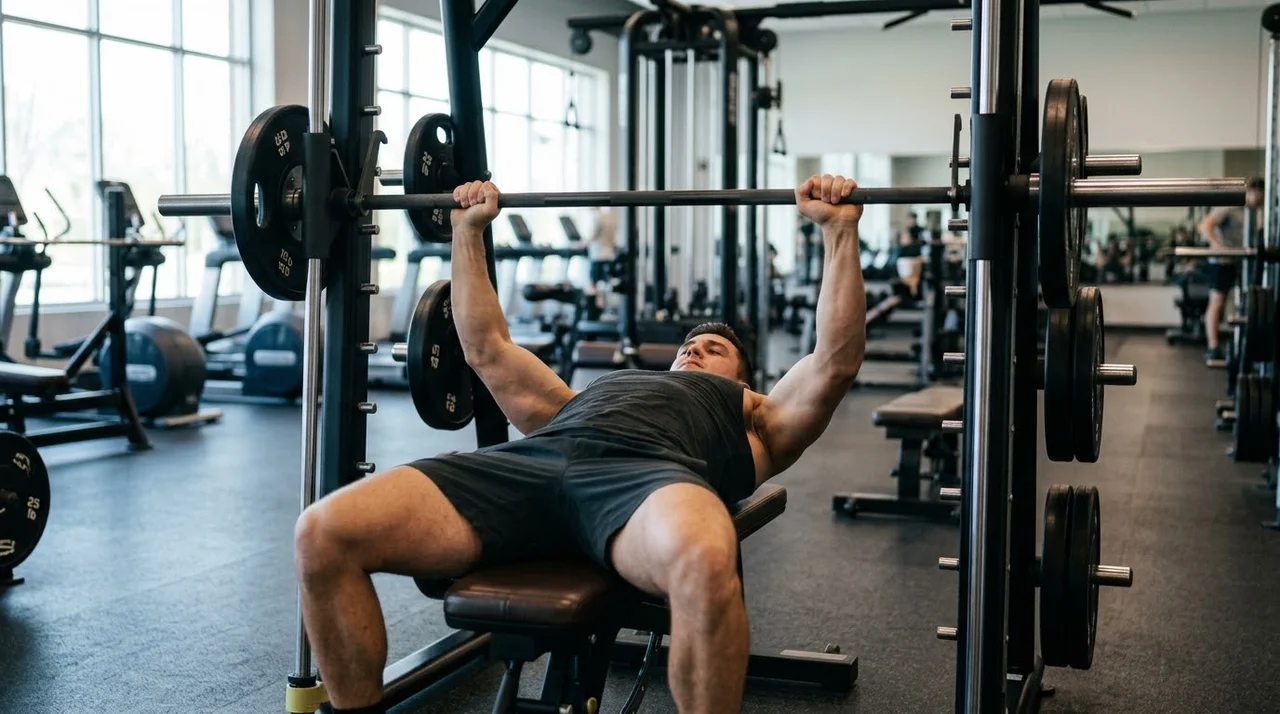
Chest lead, shoulders and triceps after5 moves · 17 setsHeavy pressing while you are fresh. This is the session where the weight on the bar should climb.
| Movement | Sets | Reps | Rest |
|---|---|---|---|
| 4 | 6-8 | 180s | |
| 4 | 8-10 | 120s | |
Standing Incline Cable Chest FlyLow pulleys, hands finishing at chin height. Chase the stretch at the bottom, not the squeeze at the top. | 3 | 12-15 | 75s |
| 3 | 10-12 | 75s | |
| 3 | 15-20 | 45s |
Pull A
Vertical pulling lead5 moves · 17 sets| Movement | Sets | Reps | Rest |
|---|---|---|---|
| 4 | 8-10 | 150s | |
| 4 | 10-12 each side | 90s | |
| 3 | 15-20 | 60s | |
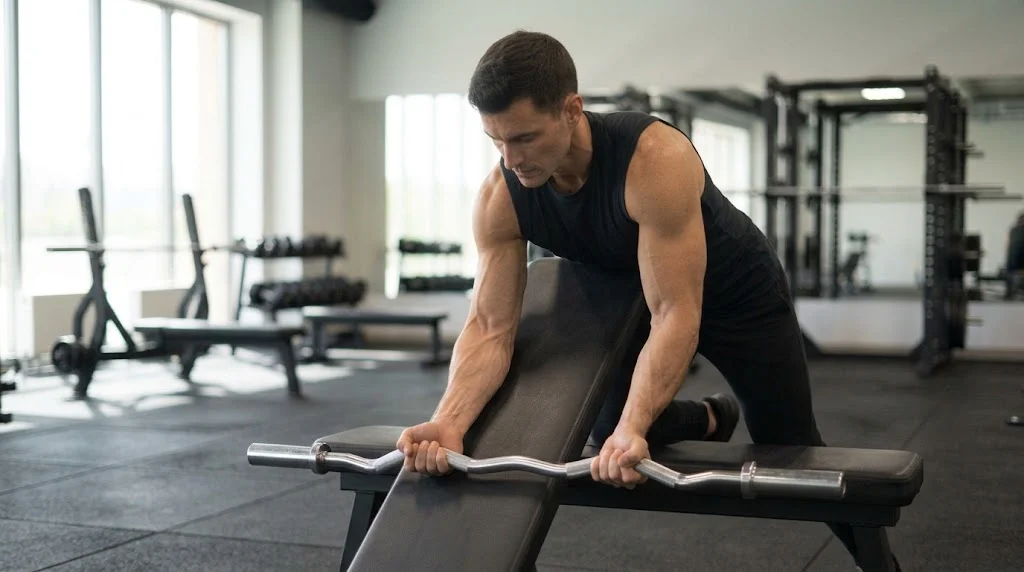 EZ Bar Spider Curl WorkoutChest on the incline bench, arms hanging dead vertical. No swing available, which is the entire reason it is here. EZ Bar Spider Curl WorkoutChest on the incline bench, arms hanging dead vertical. No swing available, which is the entire reason it is here. | 3 | 10-12 | 75s |
| 3 | 20 | 45s |
Legs A
Hinge lead5 moves · 18 setsThe session people skip. Do not be those people.
| Movement | Sets | Reps | Rest |
|---|---|---|---|
| 4 | 5-6 | 210s | |
| 4 | 8-10 | 150s | |
| 3 | 12-15 | 60s | |
Leg Press Calf Raise: Heavy Calf Work on the SledTwo seconds down, one second pause at the bottom. Calves ignore anything faster. | 4 | 12-15 | 60s |
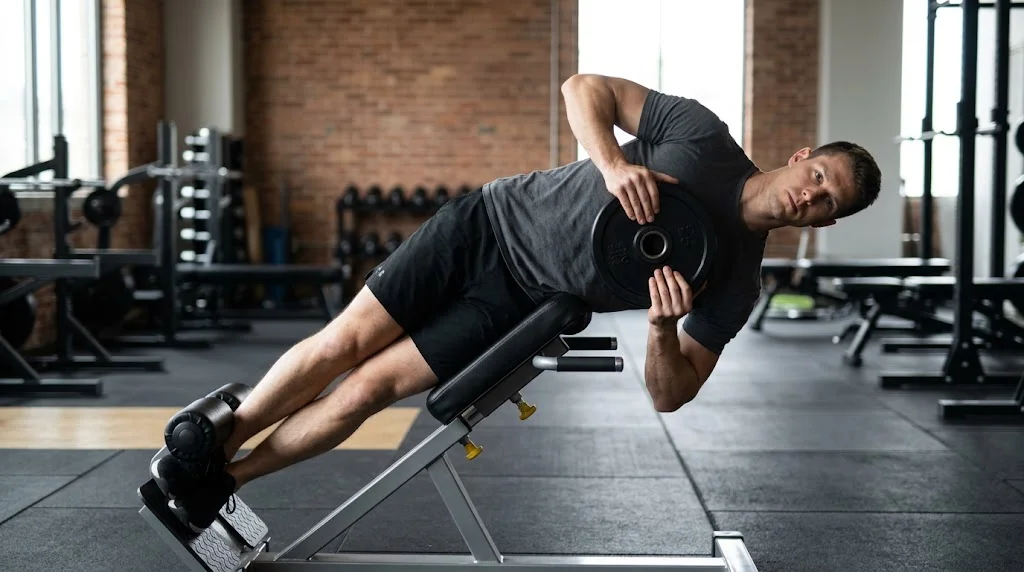
| 3 | 12 each side | 45s |
Push B
Shoulder lead, chest volume after5 moves · 17 setsSame muscles as Push A, different order and different rep ranges. That is the whole trick of a two-rotation split.
| Movement | Sets | Reps | Rest |
|---|---|---|---|
| 4 | 8-10 | 150s | |
| 4 | 8-10 | 120s | |
| 3 | 12-15 | 75s | |
| 3 | 12-15 | 60s | |
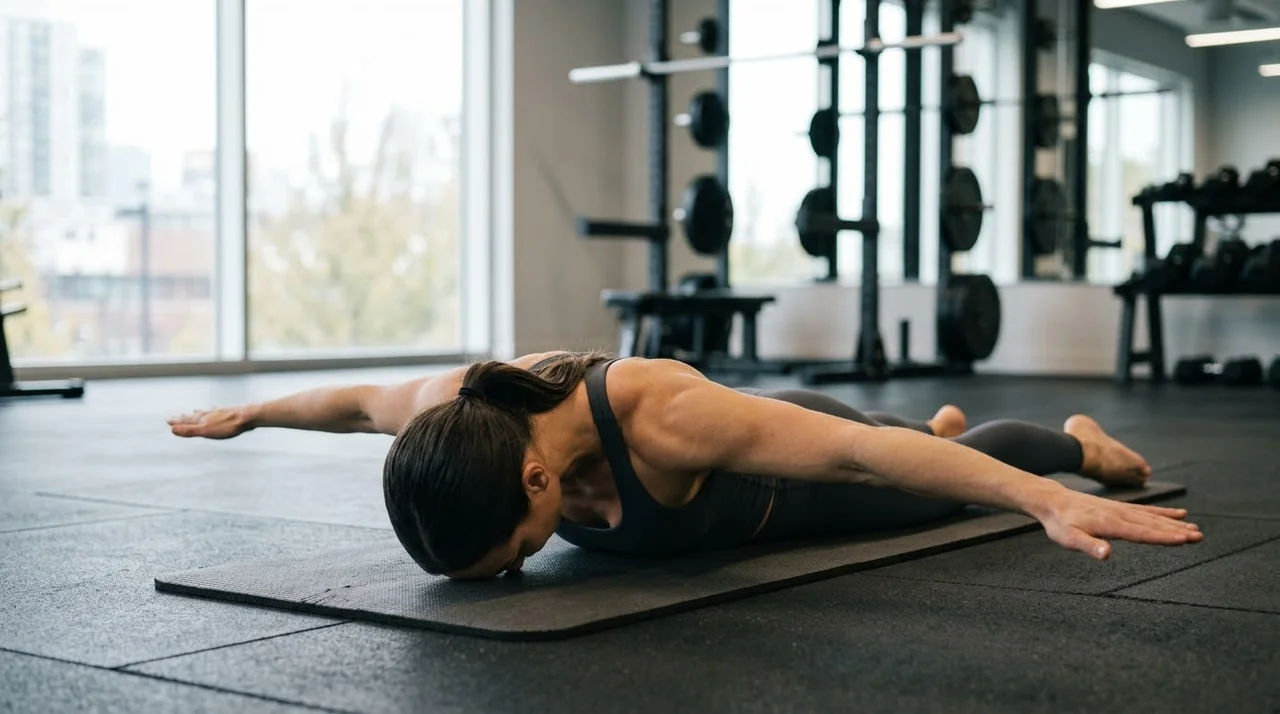 Reverse Snow AngelFace down on the floor, arms sweeping from hips to overhead without touching anything. Free, brutal, and the best rear-delt work in the plan. Reverse Snow AngelFace down on the floor, arms sweeping from hips to overhead without touching anything. Free, brutal, and the best rear-delt work in the plan. | 3 | 12 | 45s |
Pull B
Horizontal pulling lead5 moves · 17 sets| Movement | Sets | Reps | Rest |
|---|---|---|---|
| 4 | 6-8 | 180s | |
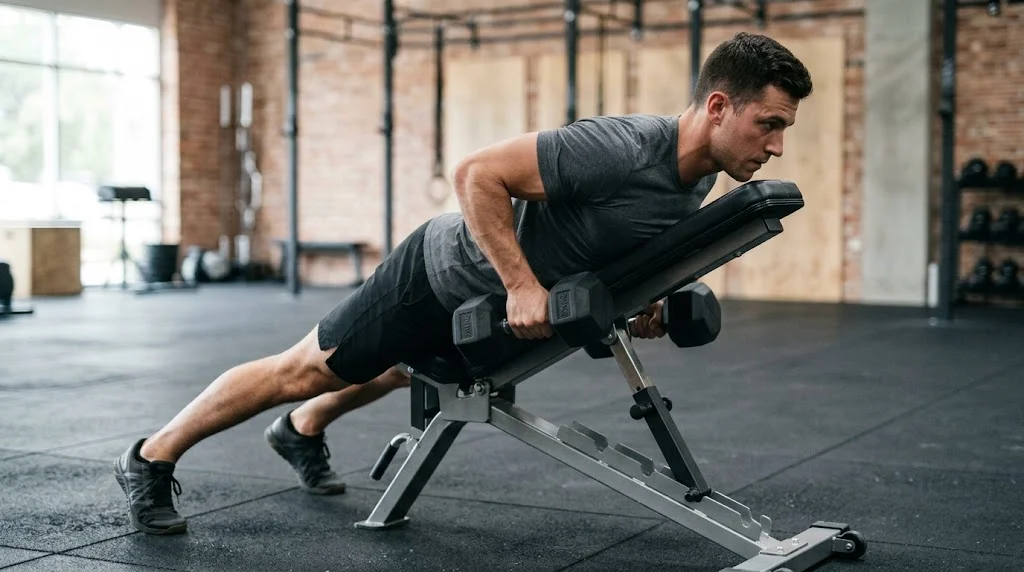 Chest-Supported Dumbbell Row: Strict Back BuilderChest stays on the pad. If it lifts off, the weight is picking the exercise for you. Chest-Supported Dumbbell Row: Strict Back BuilderChest stays on the pad. If it lifts off, the weight is picking the exercise for you. | 4 | 10-12 | 90s |
| 3 | 10-12 | 90s | |
| 3 | 10-12 each arm | 60s | |
| 3 | 12 | 60s |
Legs B
Single leg and quad volume5 moves · 17 sets| Movement | Sets | Reps | Rest |
|---|---|---|---|
| 4 | 10 each leg | 120s | |
| 4 | 8-10 | 150s | |
Cyclist SquatHeels raised on a plate. Knees travel forward on purpose here, which is the opposite of every cue you have been given, and it is what loads the quad. | 3 | 12-15 | 90s |
| 3 | 12 each leg | 60s | |
| 3 | 30s hold | 45s |
Weekly sets per muscle
Counted from the rows above, not typed in by hand. A movement that trains three muscle groups is counted for all three, so these add up to more than the 103 sets in the plan.
What the rotation actually does
Push, pull, legs. Three categories, six sessions, everything trained twice a week. The logic is boring and it's why the split refuses to die: muscles that work together get trained together, so you're never asking a triceps to be fresh for pressing the day after you fried it on pushdowns.
That last point is the one people miss. A chest day followed by a shoulder day means pressing on tired triceps twice in a row. Put every pressing muscle in one session and the fatigue lands in one place, then leaves you alone for three days.
A and B are not the same session twice
Look at Push A and Push B side by side. Both train chest, shoulders and triceps. Neither trains them the same way.
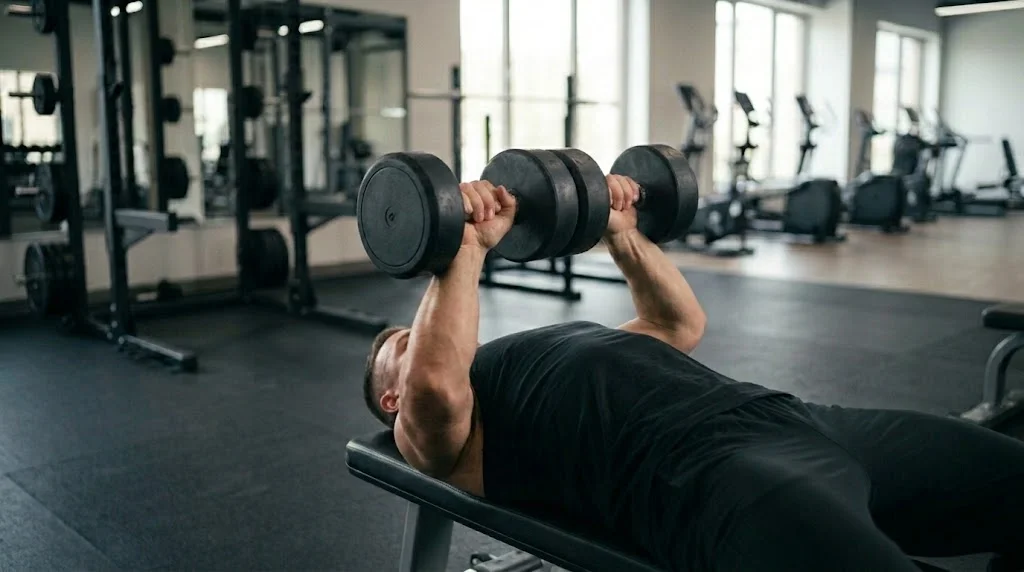
Push A opens with a flat press at six to eight reps and a fixed bar path. Push B opens with anArnold pressat eight to ten, overhead, with dumbbells rotating through the set. By the time you reach chest work on Push B you're doing cable flyes for twelve to fifteen, not grinding another heavy press.
Do that deliberately and your joints stop filing complaints around week six. Run the identical session twice a week instead and you'll find out why elbow tendinitis is the most common injury in this split.
Rest times are not padding
Three and a half minutes after a trap bar deadlift looks absurd written down. Stand there anyway. The set that follows is the one that decides whether Legs A did anything, and it can't happen on ninety seconds of recovery.
Isolation work is the opposite. Forty-five seconds between sets of rear lateral raises is plenty, and stretching it to two minutes just makes the session longer without making it better. The numbers in the tables above vary from 45s to 210s on purpose.
Running it on fewer days
Six days is the version that gets written about. It isn't the version most people run, and I'd argue it isn't the version most people should run.
Take the rotation as a queue instead of a calendar. Push A, Pull A, Legs A, Push B, Pull B, Legs B, then back to the top. Train when you can train. Four sessions a week gets you through the full rotation every ten days and still hits everything roughly twice per fortnight, which is enough to grow on if you're honest about the loads.
What doesn't work is picking your favourites. Skip Legs B three weeks running and you've built a five-day upper body program with a quad problem.
Warming up for six sessions a week
Short answer: five minutes of something that raises your heart rate, then two ramp-up sets of the first movement. Three ramp-up sets on Legs A, because a trap bar deadlift off cold hips is the one place in this rotation where skipping it costs you.
Do you need dedicated shoulder mobility work before Push B? If your overhead press feels stuck at the bottom, yes, two minutes of it. Otherwise the first light set of the press is the mobility work.
Swapping movements without breaking the plan
Every gym is missing something. The rule for substitutions is to match the pattern and the rep range, not the name.
Missing a Smith machine on Push A? Any flat press at six to eight reps. Missing a trap bar? Romanian deadlifts at six to eight, or a conventional pull if your technique holds up under load. No leg press for calves? Standing calf raises with the same two-second lowering phase.
What you shouldn't do is swap a compound for an isolation because the machine was free. Replacing a barbell row with cable flyes leaves Pull B without its heaviest movement, and the session stops doing the job it was built for.
The three mistakes that end this split early
Too much volume on the first rotation. Thirty movements a week looks like a lot on paper and feels fine in week one, which is precisely the trap. Run it as written for a month before you add a single set.
Chasing a pump on Legs A and B. Legs respond to load. The heavy hinge and the heavy squat are the session; the curls and the calf work are the rest of it. People who reverse that ratio spend two years with the same legs.
Skipping Pull B because the barbell row is hard. It's the least popular session in the rotation and the one carrying most of your mid-back development. If it keeps getting skipped, swap the barbell row for a chest-supported row permanently and stop pretending the problem is scheduling.
What to track
One number per session: the top set of the first movement. Weight times reps, written down.
Everything else is noise at this stage. Bar speed, mind-muscle connection, whether your pump lasted until lunch, none of it predicts anything. A lat pulldown top set that went from 60 kg for 8 to 75 kg for 8 over three months predicts a bigger back, reliably, every time.
When this split stops being the right one
When you're not recovering. The signal isn't soreness, it's the top set going backwards two sessions in a row on a movement you were adding weight to a month ago.
At that point cut a day before you cut the volume within a day. Five sessions of quality beats six of going through the motions, and the rotation survives the change without any rewriting at all.
Frequently Asked Questions
Do I have to train six days a week?
No. Run the six sessions in order and take a rest day whenever you need one, and the same plan becomes a three-day week that repeats every fortnight. The rotation is the plan; the calendar is yours. Most people land somewhere between four and six sessions in a typical week and that is fine.
Why are there two push days that look different?
Push A leads with a heavy horizontal press in the six to eight range. Push B leads with an overhead press and puts chest work in the ten to fifteen range afterwards. Same muscles, different order and different loads, which spreads the stress across the week instead of grinding the same joint angle twice.
Is push pull legs better than upper lower?
For someone training five or six days a week, yes, because six sessions divide more cleanly into three categories than two. Below four days a week it is worse, and noticeably so: at three sessions a week a PPL rotation trains each muscle once every seven to ten days. Use a full body plan instead.
Where is the ab work?
Side bends on Legs A, a hollow hold on Legs B, and every row and press in between. If you want more, add a set or two at the end of any session. Abs recover fast and are the one muscle group where daily work causes nobody any trouble.
6 sessions a week