Triceps Exercises
Browse triceps exercises with video guides and step-by-step instructions.
No exercises match your search.
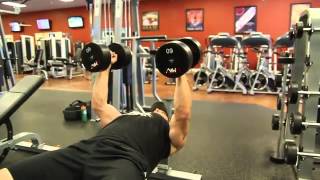
Close Grip Dumbbell Press: Bench Press Variation for Chest & Triceps

Dumbbell Skull Crusher (Standing): Triceps Isolation Guide
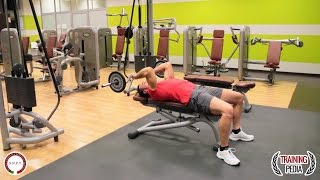
French Press Exercise: Triceps Extension Technique & Guide
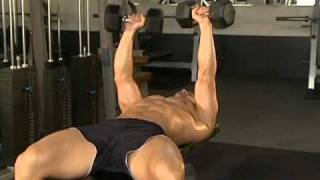
Dumbbell Piston Press
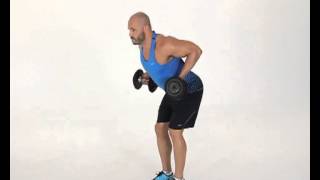
Standing Underhand Grip Bent Over Dumbbell Row
Triceps Muscles Overview
The triceps brachii is a three-headed muscle on the back of the upper arm responsible for extending the elbow and contributing to pressing strength. Unlike the biceps, which is relatively small, the triceps make up approximately two-thirds of arm mass and are therefore the primary driver of arm size. The three distinct heads targeted in tricep training are:
- Long head - the largest portion, attached above the shoulder joint. It's stretched when the arms are held overhead or behind the body, making exercises like skull crushers and overhead extensions particularly effective.
- Lateral head - located on the outer side of the arm, visible from the side. Close-grip pressing and rope pushdowns effectively target this head.
- Medial head - the smallest and innermost head, targeted most effectively with heavy pressing movements and isolation exercises using narrow hand positions.
Why Tricep Training Matters
Strong triceps are essential for pressing strength in bench press, overhead press, and all pressing variations. Because the triceps contribute significantly to these compound movements, training the triceps directly allows you to improve lockout strength and build additional muscle mass beyond what compound movements alone provide.
Tricep training also improves elbow stability and health. The triceps support the elbow joint from the back side, and strengthening them reduces the risk of elbow pain and tendinitis that can develop from excessive flexion-based work. Well-developed triceps also create the coveted "horseshoe" appearance of the upper arm and contribute substantially to overall arm size.
Exercise Categories
Tricep exercises fall into several distinct movement patterns:
Pressing movements like close-grip bench press, dips, and dumbbell floor press train the triceps heavily while also engaging the chest and shoulders. These compound movements should form the foundation of any tricep training program.
Rope and bar pushdowns extend the elbow with the upper arm held relatively stable at the side of the body. Cable rope pushdowns, V-bar pushdowns, and straight-bar pushdowns all allow for high reps with controlled tempo.
Overhead extensions move a load from behind or above the head using elbow extension. Skull crushers, overhead dumbbell extensions, and overhead rope extensions emphasize the long head of the tricep and allow a deep stretch.
Dips and bodyweight variations provide progressive overload using body weight. Modified dips (using a bench), full dips, and ring dips offer a broad range of difficulty levels suitable for any strength level.
Training Tips
Mind-muscle connection: The triceps are easily overpowered by other muscles in compound movements. In isolation exercises, focus on the triceps doing the work rather than relying on momentum or shoulder involvement.
Full range of motion: Lower the weight with control to achieve a full stretch, especially in overhead and behind-the-body movements. This range of motion drives superior muscle stimulus.
Training frequency: Like the biceps, triceps recover quickly and respond well to frequent training. Including tricep work 3-4 times per week using varied exercises prevents plateaus and drives consistent growth.
Balance with pulling work: The triceps receive stimulus from pressing movements, but also train well with lighter weights and higher reps. Balance heavy pressing days with higher-rep isolation work to maximize growth.
Key Tricep Exercises to Try
Use the filter above to browse the full library. Some starting points worth exploring include close-grip bench press, dips, skull crushers, rope pushdowns, V-bar pushdowns, overhead dumbbell extensions, overhead rope extensions, and single-arm dumbbell extensions.