Forearm Exercises
Browse forearm exercises with video guides and step-by-step instructions.
No exercises match your search.
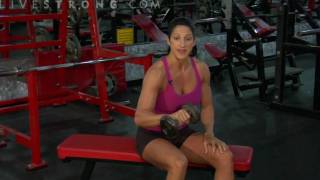
Forearm Muscles Overview
The forearms contain numerous muscles divided into flexor and extensor groups that control wrist movement and grip strength. While often overlooked, the forearms are essential for gripping and pulling movements, and strong forearms directly support overall upper body strength and functionality. The primary muscles targeted in forearm training are:
- Wrist flexors - run along the palm side of the forearm and control wrist flexion (bending the wrist downward). Training these muscles improves grip strength and wrist stability during pulling movements.
- Wrist extensors - run along the back side of the forearm and control wrist extension (lifting the back of the hand upward). These muscles are often neglected but are essential for injury prevention and balanced forearm development.
- Forearm pronators and supinators - control rotation of the forearm, allowing the hand to face palm-up or palm-down. These muscles contribute to elbow strength and rotational power.
Why Forearm Training Matters
Strong forearms dramatically improve your grip strength and pulling ability. During heavy pulling movements like deadlifts, rows, and pull-ups, your grip often fails before your larger muscles do. Building forearm strength and grip endurance allows you to handle heavier loads and complete more reps before grip fatigue becomes limiting.
Forearm training also prevents wrist and elbow injuries. Many people develop tennis elbow (lateral epicondylitis) or wrist pain from imbalanced forearm training that emphasizes flexion over extension. Training both flexors and extensors creates balanced strength and reduces injury risk significantly.
Exercise Categories
Forearm exercises fall into several distinct movement patterns:
Wrist curls and reverse curls flex and extend the wrist using dumbbells, barbells, or cables. Wrist curls target the flexors while reverse wrist curls target the extensors, allowing you to train both groups.
Grip strength exercises like farmer carries, dead hangs, and grip trainers build overall hand and forearm endurance and strength. These movements are particularly effective because they involve sustained tension rather than dynamic movement.
Pronation and supination exercises train the rotational muscles of the forearm. Pronation curls (palms down) and supination curls (palms up) through a range of motion effectively target these muscles.
Compound pulling movements like deadlifts, rows, and pull-ups heavily involve the forearm flexors and grip strength, providing significant stimulus that should be supplemented with dedicated forearm work for balanced development.
Training Tips
Train both flexors and extensors: Many lifters train wrist curls (flexion) extensively but neglect reverse curls and wrist extensions (extension). This imbalance increases injury risk and leaves strength gains on the table.
Maximize time under tension: Forearm muscles respond well to moderate weights with controlled tempos. Take 2-3 seconds to lower the weight and focus on the stretch and contraction of each movement.
Include grip work: Farmer carries and dead hangs are simple but highly effective for building grip endurance and overall forearm strength. Include them in your routine 2-3 times per week.
Training frequency: Forearms recover quickly and respond well to frequent training. Including dedicated forearm work 2-3 times per week in addition to compound pulling movements drives consistent strength gains.
Key Forearm Exercises to Try
Use the filter above to browse the full library. Some starting points worth exploring include wrist curls, reverse wrist curls, farmer carries, dead hangs, pronation curls, supination curls, and flexed-arm hangs.