Barbell Exercises – Master Compound Lifts
Browse barbell exercises with video guides and step-by-step instructions.
No exercises match your search.
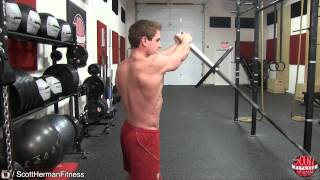
Landmine Oblique Twist

Barbell Drag Curl: Biceps Exercise for Peak & Short Head

Barbell Rear Delt Row

Underhand Barbell Row: Bent Over Row with Supinated Grip
Landmine Oblique Twist
Why Train with Barbells?
Barbells are the most efficient tool for progressive overload and building maximal strength. Because you can load a barbell with significant weight and incrementally increase the load by small amounts, barbells allow for precise strength progression that other equipment cannot match. The fixed grip and centered load path also make barbells safer for heavy compound movements than dumbbells or other implements.
Barbells enable you to train compound movements—exercises that involve multiple joints and multiple muscle groups—with heavy weight. Compound barbell exercises like squats, deadlifts, and bench presses build tremendous strength and muscle mass efficiently, making them the foundation of any serious training program.
Main Barbell Movement Patterns
Pressing movements like bench press, overhead press, and incline press develop chest, shoulders, and triceps strength. These movements build upper body pressing power and are fundamental to upper body development.
Pulling movements like rows and pull-ups train the back muscles. While pull-ups use body weight, barbell rows load the back more heavily than other equipment for maximum strength development.
Squatting and deadlifting with a barbell train the entire lower body including quadriceps, hamstrings, glutes, and lower back. These are the most demanding compound movements but produce unmatched strength and muscle gains.
Olympic lifting movements like cleans and snatches develop explosive power and athletic performance. These movements require technical proficiency but are extremely effective for power development.
Training Tips with Barbells
Master the technique first: Before adding heavy weight, perfect your form with lighter loads. Poor technique not only reduces effectiveness but increases injury risk significantly.
Progressive overload systematically: Add weight in small increments—5-10 pounds per session for upper body exercises, 10-20 pounds per session for lower body exercises. This consistent progression drives long-term strength gains.
Use proper spotters on heavy attempts: When lifting near your maximum, always have a qualified spotter present. Spotters prevent failed reps from becoming injuries.
Focus on consistent practice: Barbells reward consistent training. The more frequently you practice a barbell movement with good form, the stronger you become in that movement.
Getting Started with Barbells
Start with basic compound movements like the barbell bench press, barbell squat, and barbell deadlift. Learn proper form with lighter weight before progressing to heavier loads. Include barbell exercises 2-3 times per week for consistent strength development.