Kettlebell Exercises
Browse kettlebell exercises with video guides and step-by-step instructions.
No exercises match your search.
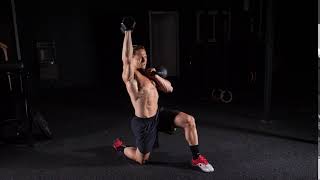
Why Train with Kettlebells?
Kettlebells combine the benefits of dumbbells with unique leverage properties that emphasize explosive power and core stability. The offset weight distribution of a kettlebell (where the mass is displaced from the handle) requires greater core engagement and stabilization than dumbbells, making kettlebell exercises highly effective for building functional strength.
Kettlebells excel at ballistic movements—explosive exercises like swings, cleans, and snatches that develop power and athletic performance. These movements are extremely effective for cardiovascular conditioning and strength development in a single exercise. Kettlebells also require less space than barbells or dumbbells, making them ideal for home or limited-equipment training.
Main Kettlebell Movement Patterns
Swings emphasize hip extension power and posterior chain development. Kettlebell swings are explosive, conditioning movements that develop significant power while training the hamstrings, glutes, and lower back.
Cleans and snatches develop explosive power and athletic performance. These Olympic lift variations require technical proficiency but are highly effective for power and strength development.
Turkish get-ups develop full-body stability and strength. Turkish get-ups are slow, deliberate movements that build shoulder stability, core strength, and body awareness.
Pressing and rowing movements with kettlebells train strength and stability. Because kettlebells are unbalanced compared to dumbbells, kettlebell presses and rows require greater core engagement.
Training Tips with Kettlebells
Master the fundamental swinging pattern: Before progressing to more complex movements, learn the kettlebell swing with perfect form. The swing is the foundation of kettlebell training.
Respect the technical movements: Cleans, snatches, and get-ups require technical proficiency. Learn these movements with lighter kettlebells before progressing to heavier loads.
Embrace ballistic movements: Kettlebells excel when used explosively. Practice fast, explosive movements to develop power and power endurance.
Control your breathing: Kettlebell exercises demand intense effort. Develop breathing strategies that allow you to maintain effort while recovering between reps.
Getting Started with Kettlebells
Start with kettlebell swings for 5 minutes, working up to 30 swings per minute with a light kettlebell. Once you have solid swing mechanics, progress to cleans, snatches, and presses. Include kettlebell work 2-3 times per week as part of a complete training program or as conditioning work.